
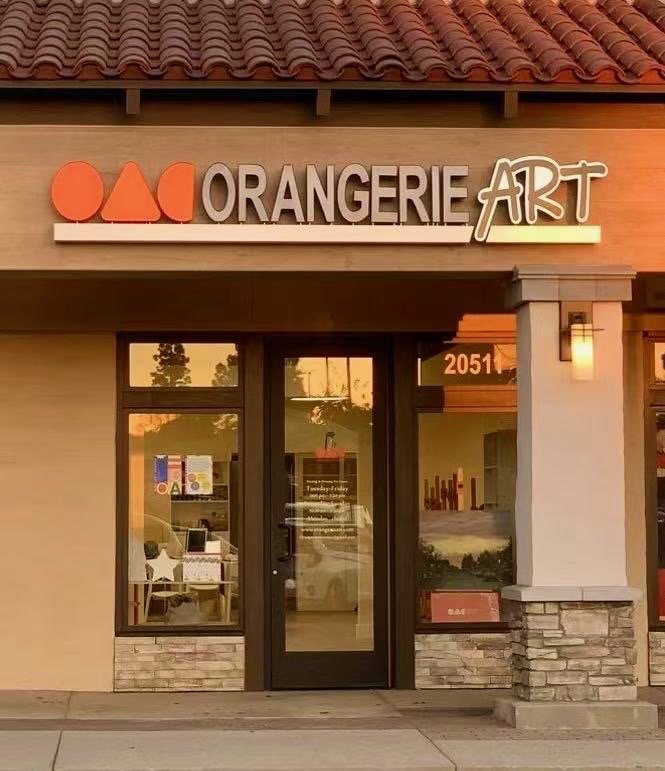
About Orangerie Art Center
Orangerie Art Center is a Yorba Linda creative community where children, teens, and adults explore, learn, and grow through hands-on art. Inspired by Paris’s Musée de l’Orangerie, home to Claude Monet’s water lillies, and our Orange County home, we are a welcoming space for imagination and artistic growth.
From a child’s first experience with color and texture to advanced portfolio development, students build technical skills, discover diverse artists and ideas, and develop their own creative voice.
Email: orangerieartcenter@gmail.com
Phone: +1 (626) 399-7818
Address: 20511 Yorba Linda Blvd, Yorba Linda, CA 92886
Frequently Asked Questions
If you have any additional questions please contact us at orangerieartcenter@gmail.com or +1 (626) 399-7818
-
Yes. We offer a specialized OCSA Portfolio Preparation Program for students applying to Orange County School of the Arts.
Preparation is customized according to the student’s intended conservatory, including:
Visual Arts
Design & Media
Production Design
Students receive guidance on portfolio requirements, individualized project planning, concept development, sketches and drafts, final artwork, portfolio organization, project descriptions, and other required application materials.
-
Yes. Our OCSA preparation goes beyond creating artwork.
Depending on the conservatory requirements, we can assist students with portfolio selection and layout, project descriptions, required audition videos, video preparation, and final online submission.
This allows students to prepare the different components of their portfolio and audition process within one structured program.
-
Yes. We provide specialized preparation for AP Drawing, AP 2-D Art and Design, and AP 3-D Art and Design.
Students receive structured guidance in concept development, artistic investigation, experimentation, technical execution, documentation, and portfolio organization.
Our goal is to help students develop a thoughtful and cohesive body of work while strengthening both their technical abilities and individual artistic voice.
-
Absolutely. Advanced training is not limited to students planning to major in art.
Students may join because they want to strengthen their artistic skills, participate in competitions, explore a serious interest in art or design, prepare for future opportunities, or simply challenge themselves creatively.
We can recommend an appropriate learning path based on each student’s age, experience, interests, and goals.
-
Earlier preparation generally gives students more time to explore ideas, develop technical skills, and create original work without rushing.
For students considering competitive art and design programs, we recommend beginning portfolio development well before application deadlines. The exact timeline depends on the student’s current level, intended major, target schools, and portfolio requirements. -
Our portfolio program combines personalized mentorship, small classes, technical training, original project development, and long-term portfolio planning.
Rather than having every student create the same projects, we develop an individualized direction based on each student’s interests, strengths, intended major, and target schools.
Our focus is on helping students build a portfolio that demonstrates not only technical ability, but also creative thinking, personal identity, experimentation, and an authentic artistic voice.
-
We welcome students ages 4 and up, including children, teens, and adults. Our programs are organized by age and skill level to provide appropriate instruction for every student.
Does my child need any prior art experience?
No prior art experience is required. Beginners are welcome! Our instructors will guide each student step by step and adjust the lessons based on their individual skill level and learning pace.
-
Yes! We offer a one-hour trial class for $10. This gives students an opportunity to experience our studio environment, meet an instructor, and see if our program is a good fit.
-
Students are generally placed according to their age and current skill level:
Junior Class: Ages 4–8
Intermediate Class: Ages 9–14
Advanced Class: Ages 14+ and adults
For students with previous art training or more advanced skills, we may recommend a different level after evaluating their work.
-
Class duration depends on the program:
Junior Class: 1.5 hours
Intermediate Class: 2 hours
Advanced Class: 2 hours
-
We keep our classes small so students receive plenty of individual attention. Each instructor typically works with approximately 4–6 students.
-
Our curriculum develops both strong technical foundations and creative expression.
Junior students explore drawing, watercolor, acrylic painting, colored pencils, markers, artist appreciation, observation, and creative projects.
Intermediate students progress into fundamental drawing, light and shadow, perspective, human anatomy, character and figure design, watercolor, acrylic painting, markers, colored pencils, and other techniques.
Advanced students receive more intensive training in drawing, painting, composition, observational studies, creative development, and portfolio-level artwork. We also offer preparation for AP Art & Design and college art portfolios.
-
Not necessarily. While younger students may sometimes work around a shared weekly theme, we encourage each child to make individual creative choices.
As students progress, projects become increasingly customized according to their skill level, interests, learning pace, and artistic goals.
-
Yes. Strong fundamentals are an important part of our program. Depending on the student’s level, instruction may include line, shape, proportion, form, light and shadow, perspective, composition, color, observation, and human anatomy.
We believe strong technical skills give students greater freedom to express their own ideas.
-
Because our classes are small, instructors work closely with each student and continuously evaluate their progress during class. Lessons and projects are adjusted according to the student’s strengths, areas for improvement, pace, and individual goals.
-
Every student develops at a different pace. Progress depends on factors such as age, experience, attendance, practice, and individual learning style.
With consistent attendance and practice, students gradually develop stronger observation, technical skills, confidence, and artistic independence.
-
Yes. We believe students should have opportunities to explore subjects they genuinely enjoy.
At the same time, instructors may assign specific exercises or projects when students need to strengthen important foundational skills. Our goal is to create a balance between structured learning and creative freedom.